
The origin of the 4-4-2 formation is contested: no single inventor is documented, and the sources in our brief point in different directions. An editorial piece hosted on the Premier League site credits Viktor Maslov with the key change, in which the two wingers dropped back alongside the two central midfielders. Other accounts credit Alf Ramsey, Hungary, or Gusztav Sebes and Flavio Costa. That disagreement is the starting point for any 4-4-2 formation history.
What can be traced is the step before it. Brazil won the 1958 World Cup in Sweden with a 4-2-4, beating the hosts 5-2 in the final, and a wide forward dropping back is described as the change that led towards the 4-4-2. This article sets out each claim, what supports it and where it is weak, and it separates the documented record from editorial judgement. It does not rewrite any historic result.
Quick answer: The 4-4-2 has no single documented inventor. Viktor Maslov is credited with the wide-midfielder drop in an editorial piece on the Premier League site, but other sources credit Alf Ramsey, Hungary, or Gusztav Sebes and Flavio Costa, so the origin remains contested. Its immediate precursor is Brazil’s 4-2-4 at the 1958 World Cup, where a wide forward dropping back was the key change.
Before the 4-4-2: Brazil's 4-2-4 and the wide-forward drop
Before the 4-4-2 had a name, the shape that sat directly behind it was Brazil’s 4-2-4. Brazil won the 1958 World Cup in Sweden playing that system and, according to a FOOTBALLKIT World Cup archive piece, beat the hosts 5-2 in the final. That scoreline comes from a weak source and has not been checked against a FIFA match report, so treat it as reported rather than confirmed.
The numbers describe the layout. Four defenders stayed at the back, two midfielders sat in front of them, and four forwards stayed high. That left only two players to cover the middle of the pitch, and the same FOOTBALLKIT archive ties Didi’s playmaking to the way Brazil’s 1958 team worked. The brief holds no stored detail on the other roles in that lineup, so this section does not assign any.
The wide-forward drop as the key change
According to footballhistory.org, the 4-2-4 is the immediate precursor to the 4-4-2, and the key change was a wide forward dropping back. That is an editorial interpretation of how formations developed, not a match record. In our view it is a useful way to read the sequence, since it explains the arithmetic. Pull one forward back on each flank and a 4-2-4 becomes a 4-4-2, with a line of four in midfield and two strikers left up front.
The Premier League’s editorial explainer on the 4-4-2 describes the same move in slightly different terms. It says the two wingers dropped back alongside the two central midfielders, and it credits Viktor Maslov with the origin. Other sources dispute that attribution, and the next section sets out the competing claims.
What came before, and what is not documented here
The WM formation is usually placed ahead of the 4-2-4 in tactical histories. The research behind this article holds no source for its specifics, so this section leaves it at that pointer and makes no claims about how it worked.
Mario Zagallo is the other name from this period that the sourcing connects to the drop, though through a later tournament. The Premier League explainer describes him dropping out of Brazil’s front line at the 1962 World Cup in Chile, creating an overload in midfield. That belongs to the next stage of the story. For 1958, two things hold: Brazil used a 4-2-4 in Sweden, and the wide forward is the player whose retreat produced the later shape. Pelé’s age and role in that tournament are not covered here, pending a check against FIFA match reports.
The reader should keep two kinds of claim apart. The 1958 shape and the reported final scoreline are historical facts awaiting verification. The line from 4-2-4 to 4-4-2 is an interpretation, and it is one that the sources themselves do not agree on.
How the wide-forward drop spread: Brazil 1962, Soviet clubs and England 1966
The route from Brazil’s 4-2-4 to the 4-4-2 is not a single documented handover. It is a set of reported episodes, some better sourced than others, and it is worth taking them in order while marking which are record and which are attribution.
Brazil in Chile, 1962
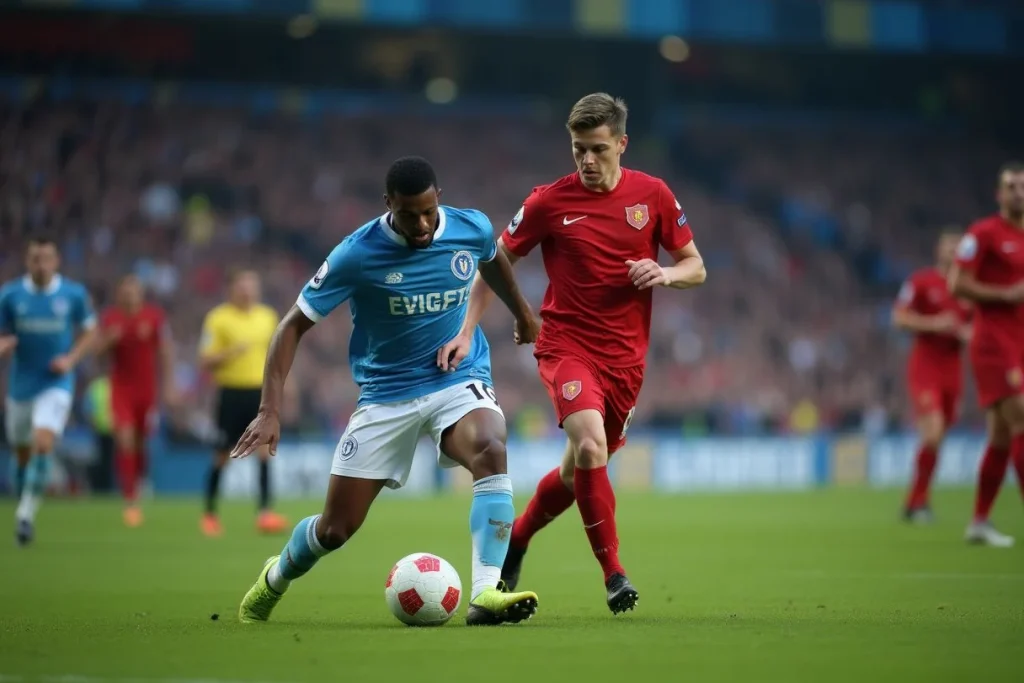
According to the Premier League’s tactics explainer on the 4-4-2, Brazil formed a 4-3-3 structure at the 1962 World Cup in Chile. Mario Zagallo dropped out of the front line to create an overload in midfield. This is a reported account of one player’s role, and it should not be read as the birth of the 4-4-2. The shape described has three forwards, not two, but the principle is the one that matters here: a wide forward tucked back to help the midfield.
Maslov and the Soviet clubs
The same Premier League-hosted editorial credits Viktor Maslov with the origin of the 4-4-2, saying his two wingers dropped back alongside the two central midfielders. That attribution is contested, and the piece is an editorial, not a primary tactical record.
Two title claims are attached to Maslov. Sports Illustrated reports that his Torpedo Moscow won the Soviet league title in 1960 with his variation. The Premier League piece says his Dynamo Kyiv won three consecutive league titles in the late 1960s. Neither claim has yet been checked against Soviet league records for this article, so both stand as reported, not confirmed. The sources also do not say which lineups produced those titles, so nothing here ties a specific starting eleven to the shape.
England in 1966: a settled result, a disputed shape
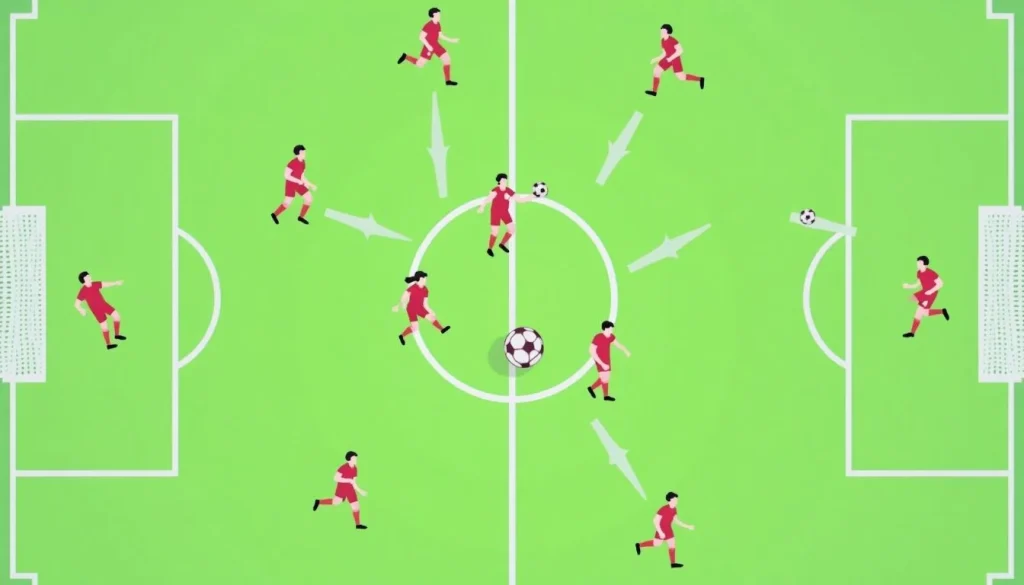
England won the 1966 World Cup under Alf Ramsey, and that result is not in question. The shape they used is. One source describes a 4-4-2 with a slight variation. The Premier League-hosted piece describes a 4-1-2-3, with Nobby Stiles as a permanent defensive midfielder. No FIFA match record has been checked for this article, so MatchOf does not name the shape as fact.
The difference is more than labelling. A 4-1-2-3 has a single holding player in front of the defence and three forwards. A flat 4-4-2 has two central midfielders sharing that work and a front pair. The two descriptions imply different roles for the same eleven men, and the sources offered here do not settle which is right.
The competing claims
A further source, a football kit retailer’s tactics blog, notes that Maslov is not confirmed as the sole inventor and that other accounts credit Ramsey, Hungary, or Gusztav Sebes and Flavio Costa. This is an editorial summary of the dispute, not evidence for any one side. The weaknesses can be set out plainly:
- Maslov: the credit rests on an editorial piece and a magazine profile, and the title claims are unchecked against league records.
- Ramsey: the 1966 shape is itself disputed between 4-4-2 and 4-1-2-3, so it cannot carry an invention claim.
- Hungary, and Sebes with Costa: the sources supplied name them as alternatives but give no lineups, dates or events in support, so MatchOf cannot assess the case.
What the record supports
The documented sequence is short. Brazil won the 1958 World Cup in Sweden with a 4-2-4 and, according to one weak source, beat the hosts 5-2 in the final. At the 1962 World Cup, Brazil are reported to have used a 4-3-3 with Zagallo dropping back. England won in 1966 in a shape that sources describe differently. Soviet title claims for Maslov sit alongside these but are unverified.
In our view, the sources point to a gradual process, a wide forward dropping back and a second bank of four forming behind a front pair, and not to one inventor with one match. That reading is an interpretation. The evidence gathered so far supports the direction of travel more firmly than any single name.
Why the shape still matters: Sacchi's Milan, Simeone's Atletico and the diamond
The 4-4-2 spread, in the publication’s reading, because it was easy to understand. One source, footballinsides.com, argues that its simplicity and its balance between defence, midfield and attack suited English clubs’ preference for organised defence and fast counterattacks. That is an analytical explanation, not a documented cause, and the numbers behind it have not been published. A separate source, soccerphile.com, describes the shape as commonplace in English football until 2005. It gives no usage figures, and none is offered here.
Sacchi's Milan and the European stage
Outside England, the shape is most often tied to Arrigo Sacchi. According to tactico.pro, AC Milan under Sacchi are credited with making the 4-4-2 famous in Europe, and the back-to-back European Cup wins in 1989 and 1990 are cited as the high-profile example. That attribution comes from a single publication, and the two titles have not been checked here against UEFA records. Readers should treat it as a reported claim, not a settled one. Other claims about Sacchi’s methods appear in weaker material and are not used here.
Simeone and the modern reference point
The best-known current example is Diego Simeone’s Atletico Madrid, which jobsinfootball.com cites as a modern practitioner of the 4-4-2. The source does not say how often or in which matches the shape was used. We therefore make no claim about specific lineups or results.
From flat base to diamond
The shape also lives on through its offshoots. A Premier League-hosted explainer presents the flat 4-4-2 as the base from which the 4-4-2 diamond later developed. That is editorial framing, not a dated invention. The practical difference is in midfield: the flat version keeps two banks of four, while the diamond arranges four midfielders in a narrower, vertical shape behind the two forwards.
For a tactics-minded reader who wants the longer story, a history of tactics from a reputable publisher is a sensible next step. The 4-4-2 is both a formation and a reference point for much of what came after it.
Frequently asked questions
Did England invent the 4-4-2?
There is no documented answer that says so. Some sources credit Alf Ramsey, while others point to Hungary, Gusztav Sebes and Flavio Costa, and the Premier League site hosts an editorial crediting Viktor Maslov. Because these attributions conflict, the origin remains contested and England’s claim cannot be stated as fact.
Was the 4-4-2 used by England when they won the 1966 World Cup?
Sources disagree. One describes England’s 1966 shape as a 4-4-2 with a slight variation. The Premier League-hosted piece describes a 4-1-2-3 with Nobby Stiles as a permanent defensive midfielder. We have not checked either against a FIFA match record, so the shape is best treated as disputed.
What is the difference between a 4-4-2 and a 4-4-2 diamond?
The standard 4-4-2 is a flat shape: two banks of four and a front pair. According to the Premier League-hosted piece, the 4-4-2 was the flat base from which the diamond later developed. The diamond reshapes the midfield four, but the sources we hold do not set out its roles in detail.
Which famous teams played the 4-4-2?
Milan under Arrigo Sacchi are credited with making the 4-4-2 famous in Europe, with European Cup wins in 1989 and 1990 cited as an example. One weaker source links Sir Alex Ferguson’s Manchester United and the 1999 Champions League to the shape, but that treble-season lineup has not been verified. Maslov’s Torpedo Moscow won the 1960 Soviet title with his variation.
Is the 4-4-2 still used today?
Yes. Diego Simeone’s Atletico Madrid is cited as a modern practitioner of the 4-4-2. We have no usage statistics, so we cannot say how common the shape is now. One source describes it as commonplace in English football until 2005.
Why did the 4-2-4 lead to the 4-4-2?
In our view, the link is the wide forward dropping back. Footballhistory.org presents Brazil’s 4-2-4 of 1958, when they beat Sweden 5-2 in the final, as the immediate precursor, with that drop as the key change. Brazil at the 1962 World Cup then formed a 4-3-3, with Mario Zagallo leaving the front line to add a midfield player.
Related articles

Sources
- The 4-4-2 diamond: football tactics explained · Retrieved October 12, 2026
- The 4-4-2: football tactics explained · Retrieved October 12, 2026
- Brazil v Sweden · Retrieved October 25, 2026
- The 4-4-2 Formation explained – Sportmonks · Retrieved October 12, 2026
- Viktor Maslov: Soviet Pioneer of the 4-4-2 Formation & the Inventor of Pressing · Retrieved October 12, 2026
- 442 Football Formation: A Historical Journey Through Iconic Teams and Achievements · Retrieved October 12, 2026
- Tactics Explained – A Look at the 4-4-2 · Retrieved October 12, 2026
- The 4-4-2 Formation Explained: History, Tactics, and Legacy · Retrieved October 12, 2026
- How the 4-4-2 Formation Shaped Football: Rise, Fall, and Spectacular Return – Actualitica · Retrieved October 12, 2026
- Classic 4-4-2 · Retrieved October 12, 2026
- The 4-4-2 Formation: Its Uses, Benefits, and Weaknesses · Retrieved October 12, 2026
- Formations in football: Every modern formation and system · Retrieved October 12, 2026
- 4 4 2 Football Tactics · Retrieved October 12, 2026
- Understanding the 4-4-1-1 Formation: The Shadow Striker … · Retrieved October 12, 2026
- The 442 Formation: Tactics, Strengths and Weaknesses — The Sporting Blog · Retrieved October 12, 2026
- 4-4-2 Formation Explained — Build-up, Press, Mid Block, … · Retrieved October 12, 2026
- How Did Didi and the 4-2-4 Formation Shift Football Tactics at the 1958 World Cup? – FOOTBALLKIT · Retrieved October 12, 2026
- How Did Brazil’s Samba Football Dismantle European Rigidity at the 1958 World Cup? – FOOTBALLKIT · Retrieved October 12, 2026
- How Did Brazil's Tactical Setup and Didi's Playmaking Secure the 1958 Football Tournament in Sweden? – FOOTBALLKIT · Retrieved October 12, 2026
- Formations in football · Retrieved October 12, 2026
- 4-2-4 Formation: Brazil's 1958 World Cup Innovation · Retrieved October 12, 2026
- soccer/formation – NamuWiki · Retrieved October 12, 2026
- All Football Formations: A Tactical History of the Game · Retrieved October 12, 2026
- The Tactical Evolution of Brazilian Soccer – Ngin · Retrieved October 12, 2026
- 1958 FIFA World Cup Final · Retrieved October 25, 2026
- 1958 FIFA World Cup · Retrieved October 25, 2026
- World Cup » Brazil against Sweden » Head-to-Head · Retrieved October 25, 2026
- 1958 FIFA World Cup final · Retrieved October 25, 2026
- Brazil v France (1958 FIFA World Cup) · Retrieved October 25, 2026
- 1958 FIFA World Cup knockout stage · Retrieved October 25, 2026
- 1958 FIFA World Cup · Retrieved October 25, 2026
- 1958 in Brazilian television · Retrieved October 25, 2026
- 1960 Soviet Top League · Retrieved October 25, 2026
- FC Torpedo Moscow · Retrieved October 25, 2026
- 1960 in Soviet football · Retrieved October 25, 2026
- 195960 Soviet Cup · Retrieved October 25, 2026
- FC Torpedo Moscú · Retrieved October 25, 2026
- 196061 Soviet Cup (ice hockey) · Retrieved October 25, 2026
- 1958 Soviet Top League · Retrieved October 25, 2026
- Viktor Shustikov · Retrieved October 25, 2026
- Valery Maslov · Retrieved October 25, 2026
- Viktor Maslov (footballer, born 1910) · Retrieved October 25, 2026

Leave a Reply