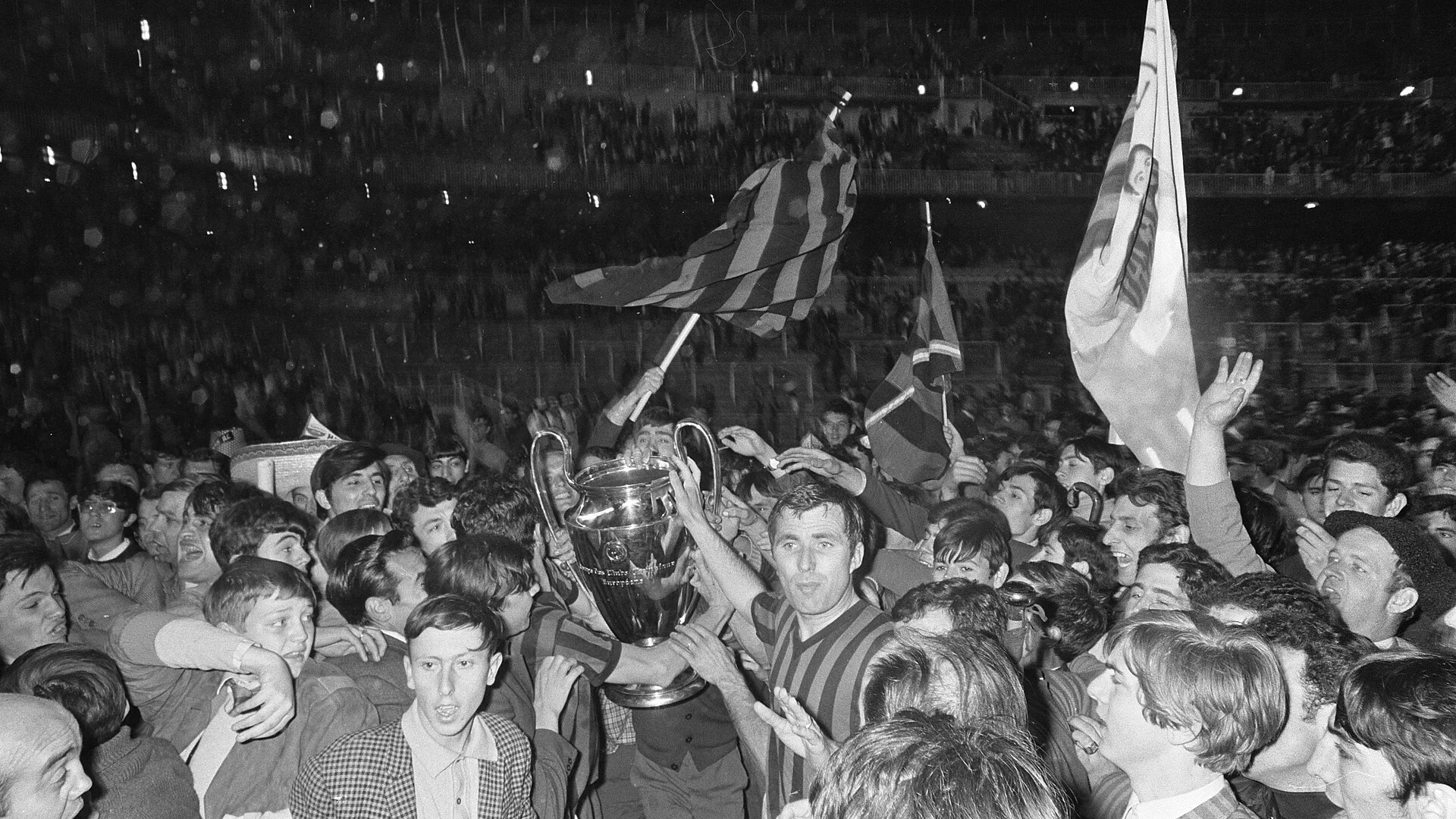
The European Cup became the UEFA Champions League for the 1992-93 season, and the competition’s history runs from a 16-team knockout event that began on 4 September 1955 to a format with a group stage and a new name. Real Madrid won the first final, beating Reims 4-3 at the Parc des Princes in Paris on 13 June 1956, with Hector Rial scoring the winning goal. This timeline of European Cup to Champions League history separates the two eras, explains the 1992 changes in plain terms and notes where sources still need care.
Marseille won the first final under the new name, beating AC Milan 1-0 in Munich on 26 May 1993, and became the first French winners. Their victory later carried controversy: allegations emerged that the club had fixed a league match against Valenciennes six days before the final. Those remain reported allegations, and Marseille were banned from defending the title the following season.
Quick answer: The European Cup launched in 1955 as a knockout competition open to domestic league champions, and its winner was regarded as European club champion. It was renamed the UEFA Champions League for the 1992-93 season, and sources report that the 1991-92 season was the first to include a group stage. Sources list Real Madrid with 15 European Cup and Champions League titles.
Where the European Cup came from in the 1950s
Before 1955, European clubs mostly met in friendlies and small invitational events. There was no official contest to decide which club side was the best on the continent. That began to change once UEFA, the governing body for European football, was formally set up in Basel on 15 June 1954, according to Wikipedia’s entry on the 1955-56 European Cup.
The European Cup followed the next year. It was a knockout tournament, meaning a team that lost a tie went out and the rest moved on until one side was left. It was open to domestic league champions, the clubs that had won their own country’s top division, and its winner was regarded as European club champion, according to Wikipedia’s article on the UEFA Champions League.
The first competition began on 4 September 1955 with 16 teams, according to the same entry on the 1955-56 season. That is a small field by later standards. The idea was simple: take the best club from each taking-part country and let them settle the question on the pitch.
Entry was based on winning your league, not on finishing high in it. This rule shaped the competition for decades. A club that finished second at home had no place in the European Cup, however strong its squad. The name reflected this: it was a cup for champions only.
The field did not stay at 16. According to EBSCO’s research starter on the UEFA Champions League, the competition doubled to 32 teams in 1960, with a fifth knockout round added to fit them in. The tournament was already growing in ambition within a few years of its launch.
That growth is the thread through the rest of this timeline. The knockout cup of the 1950s is the same competition that, from the 1992-93 season, carried the UEFA Champions League name. The next section follows how that change came about.
How the competition changed, season by season
The story starts on the pitch in Paris. Real Madrid beat Reims 4-3 in the first final at the Parc des Princes on 13 June 1956, and Hector Rial scored the winning goal, according to Real Madrid and UEFA. That final closed a first season that had begun on 4 September 1955 with 16 teams, according to Wikipedia’s season article. UEFA itself had been formally set up in Basel on 15 June 1954.
Real Madrid won again the following year. The club beat Fiorentina 2-0 in the 1957 final in Madrid, according to Wikipedia’s match article. A caution applies from here: sources do not agree on every Real Madrid final result from the late 1950s and 1960s, so each year should be checked against a primary record before it is quoted elsewhere.
From 16 teams to 32
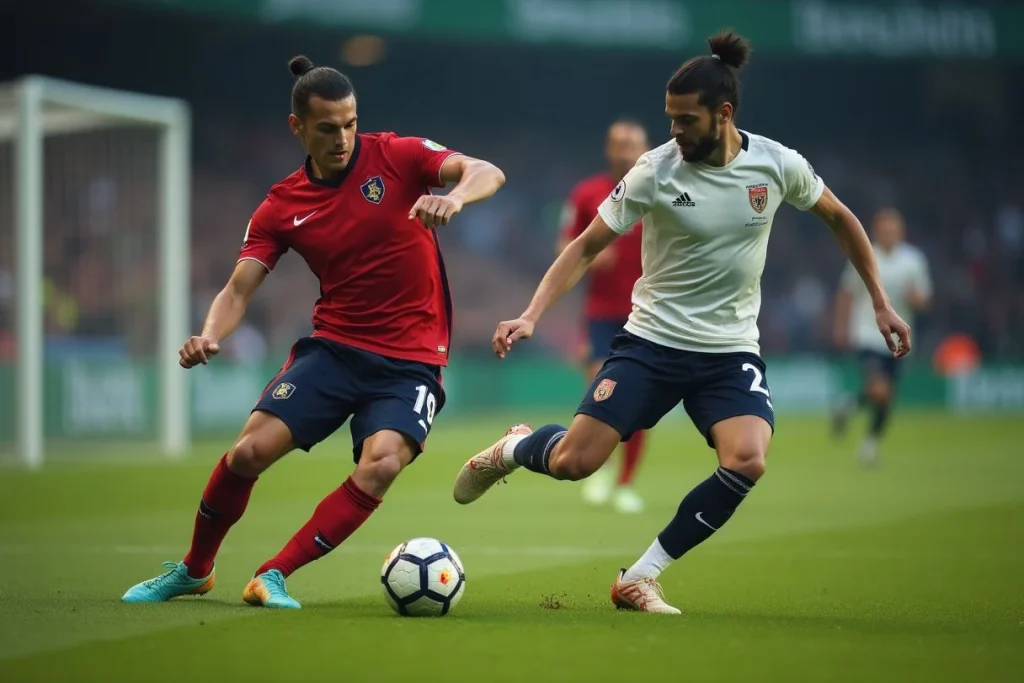
In 1960 the field doubled to 32 teams, with a fifth knockout round added, according to EBSCO. Real Madrid beat Eintracht Frankfurt 7-3 in that year’s final, according to Goal. The format stayed a straight knockout, with no groups, for more than three decades.
1991-92: the first group stage
The break came in 1991-92. According to Wikipedia, that was the first season to include a group stage: eight second-round winners were split into two groups of four before the final. In plain terms, the last stretch was no longer pure sudden death, because teams played several matches against the same opponents.
Barcelona won that edition. They beat Sampdoria 1-0 after extra time at Wembley on 20 May 1992, according to Wikipedia’s final article, which names Ronald Koeman as scorer of a free kick. We have not checked that detail against a primary match report, so treat it as reported.
1992-93: a new name
The following season the competition became the UEFA Champions League, according to Britannica. Qualifying ran from 19 August to 2 September 1992, and the group stage ran from 25 November 1992 to 21 April 1993, according to Wikipedia. The break-up of the Soviet Union and Yugoslavia led to a preliminary round, and Israel and the Faroe Islands were represented for the first time, the same source reports.
Marseille won the first final under the new name, beating AC Milan 1-0 in Munich on 26 May 1993, according to Britannica. They became the first French winners.
The win carried a shadow. According to Wikipedia, allegations emerged that Marseille had fixed a league match against Valenciennes six days before the final. These are reported allegations, not a finding we are able to confirm here. The one sanction we can source is that Marseille were banned from defending the title in 1993-94 and from the Intercontinental Cup, according to the same article.
Further changes in the 1990s
From 1993-94 the semi-finals became one-legged matches, and Yugoslav clubs were absent that season because of UN sanctions, according to Wikipedia. From 1997-98 more than one entrant from the same country was allowed, according to Wikipedia’s Champions League article. Until then, the competition had been built around national champions.
The commercial side changed too. In our view, the central sale of sponsorship and broadcasting rights by UEFA, replacing clubs selling their own, is part of what separates the Champions League era from the European Cup years, as described by Guide to Football. The anthem, composed by Tony Britten and adapted from Handel’s Zadok the Priest, was commissioned in 1992, according to Britannica.
Which club has the most European titles, and how the count is checked
Real Madrid hold the record for European Cup and Champions League titles. Sources give the club 15 in total, a figure stated by Real Madrid’s own website and by Wikipedia’s Champions League entry. That count covers both eras, from the first European Cup in 1955-56 to the Champions League years.
The 15 splits into two parts. The first came in the early years of the European Cup, starting with the 4-3 win over Reims in the 1956 final at the Parc des Princes on 13 June 1956. Sources also report final wins over Fiorentina (2-0, 1957) and Eintracht Frankfurt (7-3, 1960). Madrid’s results in the other 1950s and 1960s finals are not consistent across the cited sources, so this section does not list them.
The second part comes under the Champions League name. According to Wikipedia’s page on Real Madrid in international football, the club won the competition in these seasons:
- 1997-98
- 1999-2000
- 2001-02
- 2013-14
- 2015-16
- 2016-17
- 2017-18
- 2021-22
- 2023-24
Why the number needs care
Counts differ depending on the source and its age. A Goal list published in September 2023 gives a lower total, which reflects when it was written and should not be used. The 15 figure comes from two more recent sources, but both are secondary. Readers who want a definitive number should check it against UEFA’s own records before quoting it elsewhere.
This section does not name a current champion, because that claim has not been verified against a cited source.
Why the Champions League name and format still matter
For a fan watching today, the 1992 changes explain why the competition looks the way it does. The European Cup began in 1955 as a knockout tournament for domestic league champions, according to Wikipedia, and its winner was regarded as European club champion. Britannica reports that it was renamed the UEFA Champions League for the 1992-93 season. Wikipedia reports that the 1991-92 season had already introduced a group stage: eight second-round winners were split into two groups of four before the final.
More matches, more clubs
In plain terms, a straight knockout meant a club could be out after two games. Groups guaranteed more matches per entrant. The field also kept widening. Wikipedia reports that from 1997-98 multiple entrants from the same country were allowed, so the competition was no longer limited to one champion per nation. Earlier, the break-up of the Soviet Union and Yugoslavia had led to a preliminary round, and Israel and the Faroe Islands were represented for the first time, according to Wikipedia’s 1992-93 season page.
Money and music
Guide to Football describes UEFA moving to central sales of sponsorship and broadcasting rights, replacing clubs selling their own. That is an editorial reading rather than a verified fact, and in our view it is the change that turned a tournament into a brand.
The sound of that brand is sourced more firmly. Britannica reports that the anthem was composed by Tony Britten, commissioned in 1992, and adapts Handel’s Zadok the Priest. We recommend checking the commissioning detail against UEFA before quoting it elsewhere. We have left out trophy history because no retrieved source supports it.
The numbers suggest that the rename was less a clean break than a rebranding of a format already in motion, with the group stage arriving a season before the new name.
Frequently asked questions
Did the 1992 rename create a new competition, or only a new name?
Sources describe a renaming rather than a new tournament. Britannica reports that the European Cup became the UEFA Champions League for the 1992-93 season. The group-stage format had already appeared a season earlier: according to Wikipedia, 1991-92 was the first to include one, with eight second-round winners split into two groups of four before the final.
Which club has won the most European titles, and does that count change?
Real Madrid, according to a Real Madrid club article and Wikipedia, has won 15 European Cup and Champions League titles. The first came in 1956, when they beat Reims 4-3 in Paris. The count is a running total and can change when a new winner is crowned, so older lists showing a lower figure are out of date.
Why did Marseille lose the chance to defend their 1993 title?
Marseille beat AC Milan 1-0 in Munich on 26 May 1993, becoming the first French winners, according to Britannica. Wikipedia reports that allegations emerged that they had fixed a league match against Valenciennes six days before the final. The same source reports that Marseille were banned from defending the title in 1993-94 and from the Intercontinental Cup. The allegations are reported claims, not a finding stated here.
Did the group stage replace the knockout format completely?
No. According to Wikipedia, the first group stage in 1991-92 involved eight second-round winners split into two groups of four before the final, so knockout rounds still came before it. The 1992-93 group stage ran from 25 November 1992 to 21 April 1993. The same source reports that the semi-finals became one-legged matches from 1993-94.
Why were Yugoslav clubs absent from the 1993-94 season?
According to Wikipedia’s account of the 1993-94 season, Yugoslav clubs were absent that season because of UN sanctions. The break-up of the Soviet Union and Yugoslavia had already led to a preliminary round in 1992-93, when Israel and the Faroe Islands were represented for the first time, according to the same encyclopedia.
Who wrote the Champions League anthem, and when?
Britannica reports that the anthem was composed by Tony Britten, commissioned in 1992, and that it adapts Handel’s Zadok the Priest. That places it at the start of the Champions League era, when the competition took its new name for the 1992-93 season.
Related articles
Sources
- Season 1955/56 · Retrieved October 12, 2026
- History of the Champions League Timeline · Retrieved October 12, 2026
- Last 16 from first-ever Champions League · Retrieved October 12, 2026
- 1992 European Cup – UEFA Champions League · Retrieved October 12, 2026
- What Is the Champions League? A Detailed Look at Its History and Formation · Retrieved October 12, 2026
- Today marks the 69th anniversary of the first European Cup · Retrieved October 12, 2026
- Real Madrid's Champions League & European Cup wins: Record & full list of titles · Retrieved October 12, 2026
- UEFA Champions League · Retrieved October 12, 2026
- A Brief History of the Champions League Group Stage · Retrieved October 12, 2026
- The Champions League era · Retrieved October 12, 2026
- Five teams who were stripped of titles after shock Senegal ruling · Retrieved October 13, 2026
- Le Championnat 1992-93 · Retrieved October 13, 2026
- When Marseille won a tainted Ligue 1 title · Retrieved October 13, 2026
- When Marseille won a tainted Ligue 1 title · Retrieved October 13, 2026
- Clubs that have been stripped of titles: Will Manchester City be next after Juventus, Marseille…? – Sporten · Retrieved October 13, 2026
- UEFA Champions League roll of honour: Real Madrid, AC Milan among top men's title winners – full list · Retrieved October 13, 2026
- Real Madrid CF · Retrieved October 13, 2026
- UEFA Champions League · Retrieved October 12, 2026
- 199293 UEFA Champions League · Retrieved October 12, 2026
- UEFA Champions League · Retrieved October 12, 2026
- European Champion Clubs Cup · Retrieved October 12, 2026
- 1992 European Cup final · Retrieved October 12, 2026
- 199192 European Cup · Retrieved October 12, 2026
- 1955–56 European Cup · Retrieved October 12, 2026
- Real Madrid CF in international football · Retrieved October 12, 2026
- 195556 European Cup · Retrieved October 12, 2026
- 1957 European Cup final · Retrieved October 12, 2026
- 195556 Real Madrid CF season · Retrieved October 12, 2026
- 1959 European Cup final · Retrieved October 12, 2026
- 199293 UEFA Champions League group stage · Retrieved October 12, 2026
- 199394 UEFA Champions League group stage · Retrieved October 12, 2026
- 199394 UEFA Champions League · Retrieved October 12, 2026
- 199192 European Cup group stage · Retrieved October 12, 2026
- 199293 UEFA Champions League second round · Retrieved October 12, 2026
- 199293 French Division 1 · Retrieved October 13, 2026
- Bernard Tapie · Retrieved October 13, 2026
- French football bribery scandal · Retrieved October 13, 2026
- List of sporting scandals · Retrieved October 13, 2026
- List of European Cup and UEFA Champions League finals · Retrieved October 13, 2026
- List of Real Madrid CF records and statistics · Retrieved October 13, 2026
- 201617 UEFA Champions League · Retrieved October 13, 2026
- List of Real Madrid CF seasons · Retrieved October 13, 2026

Leave a Reply