The back-pass rule of 1992 stopped goalkeepers from picking up the ball when a teammate deliberately kicked it to them, and it took effect as the Premier League began in the 1992/93 season. Written into IFAB Law 12, it was introduced to discourage time-wasting and safe, territorial play, with concern about overly defensive football growing after the 1990 World Cup.
Before the change, a defender under pressure could pass back to the goalkeeper, who could collect the ball and hold it. After it, the goalkeeper had to play such a pass with their feet, and that led to some nervous moments in the first season, with Bruce Grobbelaar among those reported to have struggled. The sources give the year and the start of the 1992/93 season, but not the exact adoption or effective date, so this article does not claim one.
Quick answer: The back-pass rule, written into IFAB Law 12, stops a goalkeeper from handling the ball when a teammate deliberately kicks it to them. It was introduced in 1992 to discourage time-wasting and overly defensive, territorial play, with concern growing after the 1990 World Cup. The sources give the year and the start of the 1992/93 Premier League season, but not the exact adoption or effective date.
What led to the 1992 back-pass rule
Picture a match in the late 1980s. A team goes one goal ahead, and the defenders start knocking the ball back to their goalkeeper, who picks it up, holds it, and rolls it out again. Nothing in the laws of the game forbade it. The back-pass rule changed that: a goalkeeper may not handle the ball when a teammate has deliberately kicked it to them. According to Wikipedia’s entry on the rule, a breach needs three things together: a teammate kicks the ball, the kick is deliberate, and the goalkeeper handles it directly.
The rule sits in Law 12 of the Laws of the Game, which are maintained by the International Football Association Board (IFAB), according to Goal. FIFA, football’s world governing body, is the other organisation tied to the change. Wikipedia reports that FIFA ran an experiment before the rule became law, a trial covered in the next section.
The worry behind the change
Why act at all? According to Goal, the rule was introduced to discourage time-wasting. The same article says it was also meant to discourage safe, territorial play, the habit of a side keeping the ball well away from its own goal rather than trying to score. These are the reasons as reported, not a confirmed statement of every motive of the lawmakers.
These Football Times places the concern in the aftermath of the 1990 World Cup, where, it reports, there was unease about time-wasting and unduly defensive play. We have left out any match-by-match account of that tournament. The sources supplied here do not support one, and the broader point is enough: the people who ran the game felt it had become too cautious in how it used its goalkeepers.
For a casual supporter the logic is easy to follow. If a defender can pass back to a goalkeeper who is allowed to pick the ball up, the team under pressure has a free escape. The ball is safe, the clock runs down and the opposition has to wait. Take away the goalkeeper’s hands for those passes and that escape disappears, because the keeper must now play the ball with their feet like anyone else.
What the record does not say
The sources give the year, 1992, and tie the rule’s arrival to the start of the 1992/93 Premier League season. They do not give the exact date on which the change was adopted, or the date it took effect. We have not filled that gap. Nor do the sources provide figures on goals per game or on how much time was wasted before and after the change, so any claim that the rule fixed the problem by a stated amount would be a guess. What the record does support is how quickly the effects showed on the pitch, which is where the story turns.
How the rule was tested and took effect
The sequence the sources describe is short: a trial, a change in the Laws, and a first season in which goalkeepers had to relearn part of their job. The detail is thinner than the story deserves, and where it is thin, this section says so.
A trial at youth level
According to Wikipedia’s entry on the rule, FIFA ran an experiment at the 1991 U-17 World Championship before the change. That is the only source in our research that places the trial there, and it is a reference entry rather than a full report. Until it is checked against a fuller account, it should be read as reported, not settled. The sources we hold do not give the trial’s results, the exact wording tested, or who judged it a success.
The change in 1992
The rule was introduced in 1992, according to the same Wikipedia entry. The sources give the year, not the date on which the change was adopted or the date it came into force, so we do not name one. As it stands, the rule bars a goalkeeper from handling the ball when a teammate deliberately kicks it to them. Wikipedia lists three conditions for a violation: a teammate kicks the ball, the kick is deliberate, and the goalkeeper handles it directly. It sits in IFAB Law 12, according to Goal.
Goal also reports that the aim was to discourage time-wasting, along with safe, territorial play. That fits the concern that followed the 1990 World Cup over time-wasting and unduly defensive football, as described by These Football Times.
The 1992/93 season
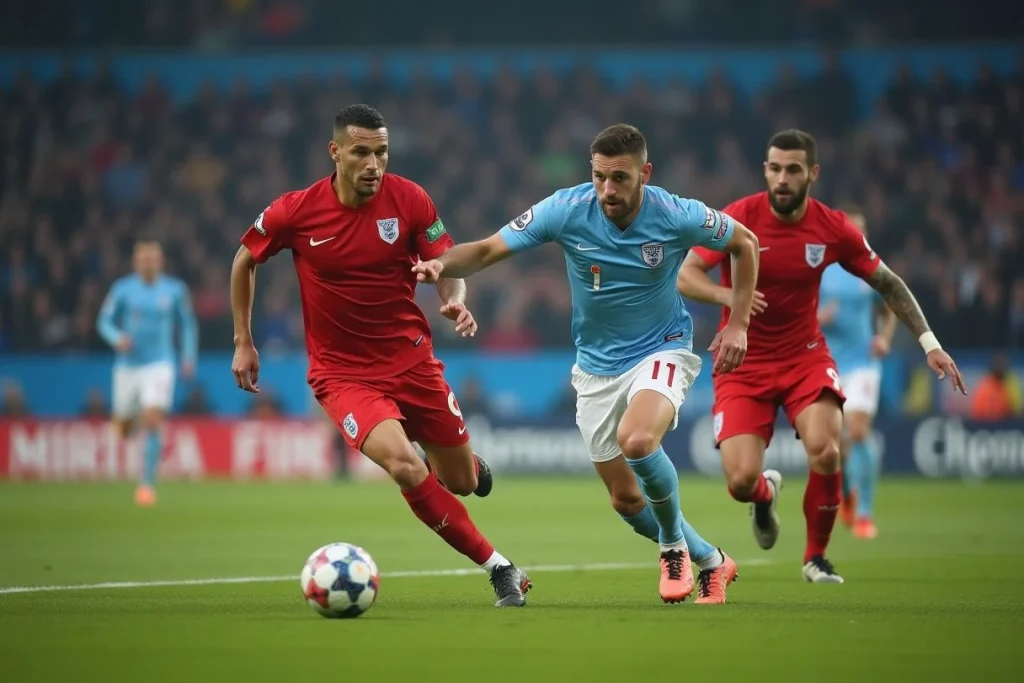
For English supporters, the change arrived with a new competition. According to These Football Times, the rule took effect as the Premier League began in 1992/93. The two landmarks shared a season, and the article’s title says the rule changed football in England “almost overnight”. That is the publication’s description, and we have no figures to measure it against.
The effects showed first in goalkeeping. ESPN, in its piece on the early chaos of the backpass law, reports that goalkeepers including Bruce Grobbelaar struggled with nervous dribbling after the change. We have only a snippet of that article and no quote from it, so the claim is attributed and not expanded. We will not describe individual mistakes, because the sources do not identify any.
Plainly put, a goalkeeper who had been able to pick up a teammate’s deliberate pass now had to play it with his feet, often under pressure from an attacker. For players trained mainly to use their hands, that was a real change, and it is easy to see why it unsettled some of them. That is our reading of the rule, not a finding from the sources.
What the record does not give us
- The exact date of adoption and of the rule taking effect.
- The details and results of the 1991 U-17 trial.
- The first back-pass free kick or the first goal scored from one.
- Any figures on goals per game, pace of play or time-wasting before and after.
Those gaps matter. The rule’s purpose is well documented. Its measured effect, in numbers, is not something we can supply.
Why the back-pass rule still matters
The back-pass rule still matters because it is still in the book. According to goal.com, it is written into IFAB Law 12, the law that covers handling and fouls, and it carries the same purpose it had in 1992: to discourage time-wasting.
The three conditions
For a casual fan, the rule is easier to follow once it is broken into parts. According to Wikipedia’s entry on the rule, a violation needs three things at once:
- A teammate kicks the ball.
- The kick is deliberate.
- The goalkeeper handles the ball directly.
Take away any one of them and there is no offence. A ball that rebounds off a defender by accident is not a deliberate kick. A pass with the head or chest is not a kick. A goalkeeper who plays the ball with his feet has not handled it. The rule does not stop goalkeepers from receiving passes; it stops them from picking up one kind of pass.
A goalkeeper who has to play
In our view, this is the real legacy. Before 1992, a team protecting a lead could pass back to the goalkeeper, who could pick the ball up and hold it. The rule removed that option. According to goal.com, it was meant to discourage time-wasting, and also the safe, territorial play that went with it. A goalkeeper under pressure now has to do something with his feet.
The early evidence shows how much that asked of them. ESPN reported that goalkeepers including Bruce Grobbelaar struggled with nervous dribbling after the change. That is a reported claim from a single source, and we have not retrieved a direct quote.
Goalkeeping and the clock
The rule also established a link that rulemakers have kept: goalkeeper behaviour and time-wasting are treated as the same problem. Because the back-pass sits in Law 12 and was justified by time-wasting, handling restrictions have become a tool for managing the pace of a match. That reading is our interpretation of the sources, not a stated finding.
What we cannot offer is a measured effect. No sourced figures on goals, match length or pace of play before and after 1992 have been published in the material we hold, so we make no claim about them. What the record supports is the purpose, the placement in the laws, and the way the three conditions still define what a goalkeeper may and may not touch.
Frequently asked questions
Is the back-pass rule still in force today?
The sources supplied here do not include a current statement from IFAB, so this article cannot confirm the present wording. What is sourced is that the rule was introduced in 1992 and is written into IFAB Law 12, according to goal.com. For the current text, readers should check the Laws of the Game published by IFAB.
What happens if a teammate's kick to the goalkeeper is not deliberate?
Then the rule is not broken. According to the reference summary, a violation needs three conditions: a teammate kicks the ball, the kick is deliberate, and the goalkeeper handles it directly. If any one of those is missing, the goalkeeper is not penalised under this rule. The sources supplied do not cover how referees judge intent.
Who were the bodies behind the back-pass rule, and where is it written?
The rule sits in IFAB Law 12, according to goal.com. IFAB is the body that maintains the Laws of the Game. FIFA is reported to have run an experiment at the 1991 U-17 World Championship before the change. The sources supplied do not give the exact date of the formal decision.
Was the back-pass rule tested before it became law?
Yes, according to the reference summary: FIFA is reported to have run an experiment at the 1991 U-17 World Championship before the change. That trial is supported only by a reference entry so far, and the sources supplied do not give details such as how it was run or what it showed. We have not stated any results.
Why is Bruce Grobbelaar linked to the early years of the rule?
ESPN reports that goalkeepers including Bruce Grobbelaar struggled with nervous dribbling after the change. This is a reported claim, and the sources supplied do not include a quote or a specific match. The rule took effect as the Premier League began in 1992/93, according to These Football Times, so the struggles belong to that first season.
What exact date did the back-pass rule take effect?
The sources give only the year, 1992, and say the rule took effect as the Premier League began in the 1992/93 season, according to These Football Times. An exact adoption date and effective date have not been confirmed in the material supplied, so we do not give one. The IFAB Law 12 record is the place to verify it.
Related articles
Sources
- Law 12 – Fouls and Misconduct · Retrieved October 25, 2026
- Law 12 – Fouls and Misconduct · Retrieved October 25, 2026
- The Soccer Pass Back Rule: What Is A Back Pass And What Are The Laws? · Retrieved October 13, 2026
- What is a back pass in football? Rules explained & potential punishments · Retrieved October 13, 2026
- Back Pass in Soccer: A Complete Explanation · Retrieved October 13, 2026
- The Back-Pass Rule Explained — How One 1992 Decision Changed Football Forever · Retrieved October 13, 2026
- Goalkeeper Rules in Soccer: Handling, the Back-Pass, and the New 8-Second Law · Retrieved October 13, 2026
- Back Pass Rule Football: How 1 Law Stopped Time-Wasting · Retrieved October 13, 2026
- Goalkeeper Rules 2026: Backpass, 8 Seconds and Equipment · Retrieved October 13, 2026
- Unsure Footing – 99% Invisible · Retrieved October 13, 2026
- How the back-pass rule changed football in England almost overnight · Retrieved October 13, 2026
- The Games That Defined Modern Football: Republic of Ireland 0-0 Egypt · Retrieved October 13, 2026
- Back-pass rule — Grokipedia · Retrieved October 13, 2026
- Shocking History and Origin of Back Pass Rule in Football · Retrieved October 13, 2026
- 'Invention' of Premier League in 1992 changed face of modern football – ESPN · Retrieved October 13, 2026
- Football was (re)invented in 1992: the early chaos of the backpass law – ESPN · Retrieved October 13, 2026
- The Back-Pass Rule · Retrieved October 13, 2026
- What is the backpass rule in football after Alex Palmer's Ipswich howler · Retrieved October 13, 2026
- HOW THE BACK-PASS RULE CHANGED FOOTBALL OVER NIGHT – · Retrieved October 13, 2026
- The Story of Premier League Tactics, from Route One to … · Retrieved October 25, 2026
- Packie Bonner, Anthony Nash And Others Who Helped Inspire Rule Changes In Their Sport · Retrieved October 25, 2026
- Denmark 'Exploited Back-Pass Rule' to Win Euro 1992 · Retrieved October 25, 2026
- The Rule That Changed Everything: How the Back‑Pass Law Transformed Modern Football – Soccer Wizdom · Retrieved October 25, 2026
- ESPN.com – Football was (re)invented in 1992: the early chaos of the backpass law · Retrieved October 25, 2026
- BACK PASS RULES – FOOT BALL RULES · Retrieved October 25, 2026
- 1991 FIFA U-17 World Championship – Wikidata · Retrieved October 25, 2026
- 1991 FIFA U-17 World Championship – Wikiwand · Retrieved October 25, 2026
- What's a "trick"? · Retrieved October 25, 2026
- Ask the Referee — Soccer Rules Q&A · Retrieved October 25, 2026
- Fouls and Misconduct – Law 12 · Retrieved October 25, 2026
- Back-pass rule · Retrieved October 13, 2026
- Goalkeeper (association football) · Retrieved October 13, 2026
- Running out the clock · Retrieved October 13, 2026
- 1991 FIFA U-17 World Championship · Retrieved October 25, 2026
- 1991 FIFA U-17 World Championship squads · Retrieved October 25, 2026
- 1991 South American U-17 Championship · Retrieved October 25, 2026
- 1991 OFC U-17 Championship · Retrieved October 25, 2026
- 1990 FIFA World Cup · Retrieved October 25, 2026
- 1991 FIFA World Youth Championship · Retrieved October 25, 2026
- International Football Association Board · Retrieved October 25, 2026
- Professional foul · Retrieved October 25, 2026
- Goalkeeper · Retrieved October 25, 2026
- Fouls and misconduct (association football) · Retrieved October 25, 2026

Leave a Reply