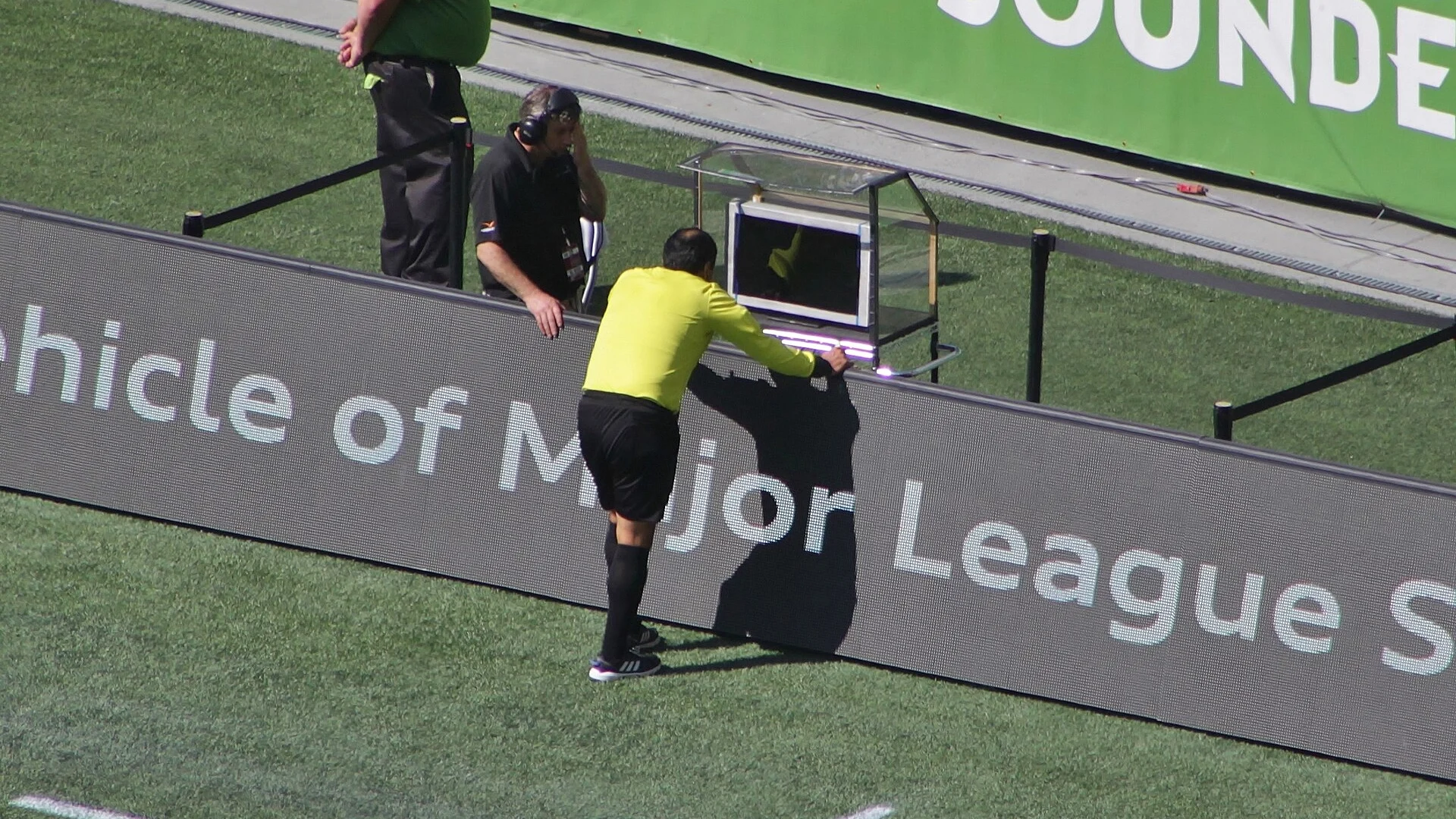
On 5 July 2012 in Zurich, the International Football Association Board (IFAB), the body that sets the Laws of the Game, approved two goal-line systems: Hawk-Eye and GoalRef. The approval came in principle. Each stadium still needed a final installation test before either system could be used. That made it the first formal step in the goal-line technology to VAR timeline, the moment football’s lawmakers accepted that technology could help decide whether a ball had crossed the line.
Both systems were approved unanimously, according to the reports behind this piece, after the Swiss test house EMPA presented its findings. Sepp Blatter, who chaired the meeting as FIFA president, was reported to have come round to the idea after years of opposing it. FIFA general secretary Jerome Valcke said the governing body intended to use the technology at the Club World Cup in Japan in December 2012, the 2013 Confederations Cup and the 2014 World Cup. The VAR chapters have not yet been researched, so this timeline covers the sourced 2012 record only.
Quick answer: IFAB approved Hawk-Eye and GoalRef in principle on 5 July 2012 in Zurich, with a final installation test still required at each stadium. FIFA then said it planned to use goal-line technology at the Club World Cup in Japan in December 2012, the 2013 Confederations Cup and the 2014 World Cup. The VAR part of the timeline has not yet been researched. This piece covers only what the sourced 2012 record confirms.
Where goal-line technology came from
For years, many fans wanted football to take human error out of goal decisions. According to Al Jazeera, that call for technology had been growing long before 2012. The question was never only whether a machine could judge a ball crossing the line, but who had the authority to let it into the game.
That authority sits with the International Football Association Board, or IFAB, the body that sets the Laws of the Game. Any new equipment that changes how a goal is awarded has to pass through it. FIFA, the sport’s world governing body, runs its own tournaments, but it cannot simply switch a technology on across the sport without the Board’s approval.
The man in the chair
The 2012 meeting was chaired by Sepp Blatter in his role as FIFA president. According to Sportsvideo, Blatter now backed goal-line technology after years of opposing it. That is a reported account, and it is paraphrased here rather than quoted. The change of position matters for the story: the man who had long stood in the way was now presiding over the decision.
What the Board was weighing
By the summer of 2012, two systems had been through IFAB’s Test Phase 2, which was run by the Swiss test house EMPA, according to Sportsvideo. The two systems worked in different ways:
- Hawk-Eye is a camera-based system developed in the UK and owned by Sony, according to Sportsvideo.
- GoalRef uses a chip in the ball and sensors in the goal, with technology from Fraunhofer IIS, according to Sportsvideo.
On 5 July 2012 in Zurich, IFAB approved both. Al Jazeera reported the decision, and Sportsvideo added that it was unanimous in principle after EMPA presented its report. ScienceDaily is clear on the limit of that approval: it was given in principle, and each stadium still needed a final installation test before use.
A note on the record: the facts in this article are from 2012 and are kept as they were reported at the time. They are not updated to describe how the systems work today.
What happened in 2012 and after
The decision itself is simple to state. On 5 July 2012 in Zurich, IFAB, the body that sets the Laws of the Game, approved two goal-line systems: Hawk-Eye and GoalRef. Al Jazeera reported the approval, and ScienceDaily confirms the condition attached to it: approval was in principle, and each stadium still needed a final installation test before either system could be used.
The meeting in Zurich
According to Sportsvideo, both systems were approved unanimously in principle after the Swiss test house EMPA presented its report. The same outlet reports that both had gone through IFAB’s Test Phase 2, which EMPA ran. Sportsvideo also reports that Sepp Blatter, who chaired the meeting as FIFA president, now backed goal-line technology after years of opposing it. That is a paraphrase of the report, not a quotation from Blatter.
Al Jazeera reported that fans had called for years for technology to remove human error from goal decisions. The 2012 vote was the point at which the sport’s rule-makers formally answered that call, with the stadium-by-stadium testing still to come.
The two systems in plain language
Sportsvideo describes the two approaches as quite different.
- Hawk-Eye is a camera-based system. It was developed in the UK and is owned by Sony.
- GoalRef works with a chip in the ball and sensors in the goal. It uses technology from Fraunhofer IIS.
In short, one system watches the ball with cameras, while the other detects it through the equipment itself. These are the descriptions as reported in 2012 and are not an account of how either system works today.
FIFA's plans, as reported

The Irish Times reported that Jerome Valcke, then FIFA general secretary, said FIFA intended to use goal-line technology at three tournaments: the Club World Cup in Japan in December 2012, the 2013 Confederations Cup and the 2014 World Cup. These are stated intentions from July 2012. The sourced record for this article does not cover whether each plan went ahead as described, so this section does not say that it did.
The Irish Times also offered a view on cost. It said Irish clubs were likely to be priced out of the technology in the medium term. That was the newspaper’s prediction in 2012, not an established outcome. A reported figure for what FIFA would pay per stadium at its own events also appeared in that coverage, but the text available to us is incomplete, so we have left the number out until the exact wording can be confirmed.
A note on testing
One further detail on testing comes from Wikipedia, which says GoalRef was tested in the Danish Superliga during phase two. Wikipedia is a lead rather than a reliable record, and we have not confirmed the claim elsewhere. Treat it as unverified for now.
What this timeline does not yet cover
The path from goal-line technology to the video assistant referee (VAR) is not covered in this section. The VAR trials, its approval, its first use in a major competition and its current status still need research against reliable sources, and we have not written them from memory. What the sourced record does establish is the 2012 starting point: two systems approved in principle on 5 July, installation tests still to come, and FIFA’s plans for three tournaments, stated as intentions.
Why the 2012 decision still matters
The 2012 decision matters because it turned an old argument into a working rule. Before 5 July, technology to settle goal-line calls was a debate. After it, the International Football Association Board (IFAB), the body that sets the Laws of the Game, had approved two named systems, Hawk-Eye and GoalRef, for use in competition. According to Al Jazeera, fans had called for years for technology that would remove human error from goal decisions.
The caveat is the one that has run through this timeline. Approval was given in principle, and each stadium still needed a final installation test before use, as ScienceDaily reported. A green light in Zurich did not put cameras or sensors in every ground. It created a route by which a venue could qualify.
Planned first uses, not confirmed outcomes
The Irish Times reported that Jerome Valcke, then FIFA general secretary, said FIFA intended to use goal-line technology at the Club World Cup in Japan in December 2012, at the 2013 Confederations Cup and at the 2014 World Cup. These were stated plans. This section does not confirm that each tournament went ahead as described, and it does not report what happened there.
The change of heart at the top also matters. According to Sportsvideo, Sepp Blatter, who chaired the meeting as FIFA president, now backed goal-line technology after years of opposing it.
The cost question
Who could afford the systems was an open question from the start. The Irish Times said Irish clubs were likely to be priced out of the technology in the medium term. That was the newspaper’s forecast in 2012, not an established fact, and this piece does not check it against later events.
What this record does not cover
Anything about VAR, later rule changes or the current state of the technology is outside what has been sourced here, so it is left out rather than written from memory. For readers who want the wider story of how the Laws of the Game have changed, a history book on the sport’s rule changes is a natural next read. That is an editorial suggestion only.
Frequently asked questions
Is goal-line technology the same thing as VAR?
No. Goal-line technology answers one narrow question: did the whole ball cross the line? The 2012 record covers only that. IFAB approved two goal-line systems, Hawk-Eye and GoalRef, on 5 July 2012. VAR is a separate system, and its history has not yet been researched for this piece, so we do not cover it here.
How does goal-line technology actually work?
The two approved systems work differently. According to Sportsvideo, Hawk-Eye is a camera-based system developed in the UK and owned by Sony. GoalRef, according to the same report, uses a chip in the ball and sensors in the goal, with Fraunhofer IIS technology. Both went through IFAB’s Test Phase 2, run by the Swiss test house EMPA, according to Sportsvideo.
Who was behind the decision to bring it in?
IFAB, which sets the Laws of the Game, approved both systems in Zurich on 5 July 2012, according to Al Jazeera. Sportsvideo reported that approval was unanimous in principle after EMPA presented its report. It also reported that Sepp Blatter, who chaired the meeting as FIFA president, now backed the technology after years of opposing it.
Who pays for goal-line technology in stadiums?
The sourced material gives no confirmed answer. A figure of up to 200,000 euros per stadium for FIFA’s own events appears only in a truncated Irish Times text, so it is not stated here as fact. What is confirmed is that approval was in principle and each stadium still needed a final installation test before use, according to ScienceDaily.
Were Irish clubs expected to be priced out of the technology?
The Irish Times said so in 2012. It predicted that Irish clubs were likely to be priced out of the technology in the medium term. That was a forecast made at the time of approval, not a confirmed outcome, and this article does not update it with later events.
Which competitions were planned to use goal-line technology first?
According to the Irish Times, Jerome Valcke, then FIFA general secretary, said FIFA intended to use it at the Club World Cup in Japan in December 2012, the 2013 Confederations Cup and the 2014 World Cup. Those were stated plans in 2012. This piece does not confirm from its sources how each tournament went.
Related articles



Sources
- FIFA approves goal-line technology · Retrieved October 13, 2026
- Goal-line technology approved in soccer · Retrieved October 13, 2026
- IFAB approves goal-line technology · Retrieved October 13, 2026
- GoalRef: FIFA approves intelligent goal · Retrieved October 13, 2026
- Goal-Line Technology Gets Green Light From IFAB · Retrieved October 13, 2026
- Football rule-makers approve goal-line technology · Retrieved October 13, 2026
- IFAB approves Goal Line Technology! · Retrieved October 13, 2026
- Goal-line technology — Grokipedia · Retrieved October 13, 2026
- GoalRef · Retrieved October 13, 2026

Leave a Reply