
A high press is a defensive approach in which a team tries to win the ball close to the opponent’s goal by pressing in the opponent’s half rather than waiting in its own. That is the short answer to what a high press in football means, and it is the definition this piece uses throughout.
This is a generic explainer, not a match analysis. No lineup, event or statistics data for a specific match or team has been supplied, so it names no formations, player roles or figures as fact. Instead it explains the press through the pieces that can be measured: PPDA (passes per defensive action), high turnovers and pressing triggers. It also flags where each measure has limits, starting with the fact that data providers do not define PPDA in exactly the same way.
Quick answer: A high press is a defensive approach in which a team tries to win the ball close to the opponent’s goal by pressing in the opponent’s half. It is best understood through PPDA, high turnovers and press triggers, and PPDA definitions differ between data providers. Because no specific match, lineup or team data is stored, this article is a generic explainer, not a match analysis.
What a high press means in football
A high press is a defensive approach in which a team tries to win the ball far from its own goal, by closing down opponents in their half rather than waiting for them to cross the halfway line. The aim is to shorten the time and space the opposition has on the ball, so that mistakes and rushed passes happen close to the goal they are attacking. This section is a definitional explainer, not a match analysis: no lineup, event or statistical data is stored for any team, so no figures appear here.
The easiest way to see the difference is by where the team starts to engage. In a high press, the first act of pressure comes in the opponent’s half, often while the goalkeeper or centre-backs still have the ball. In a mid-block, the team holds a compact shape around the halfway line and presses when the ball enters that zone. In a low block, it defends deep near its own goal, giving up territory and protecting the space in front of the penalty area.
These are descriptions of tendencies, not fixed categories. A team can press high in some phases and drop into a mid-block in others, and the height of the block can shift during a match.
The sourcing for this piece is also incomplete. The England Football Learning article on implementing a high press (published 2 February 2026) is the intended definitional reference, but it has not yet been read and checked by a writer, so no claim here is attributed to it. Until that check is done, the definitions above stand as general football terminology rather than a sourced quotation.
Shape and setup: what can be said without lineups
Describing a pressing shape starts with a convention, not a team. Formation notation such as 4-4-2 or 4-3-3 lists outfield players from defence to attack, and it is only a starting label. A team’s actual shape in any match has to be taken from its published lineup, and no lineup is stored for this explainer, so nothing below describes a real side.
What follows is an illustrative diagram, not a real team’s setup. Picture a front pair stepping onto the two centre-backs while the midfielders behind them stand close enough to cut the passing lanes into midfield. The aim of that arrangement is to leave the player in possession with few safe options. The line behind the midfield then has to hold a position that keeps the distances between units short.
Two things make shape a limited guide. First, the label on a team sheet describes where players start, not where they stand when the press begins. A 4-3-3 can become a 4-4-2 out of possession, or the reverse, and only event or tracking data would show which happened. Second, the same notation can describe a high press, a mid-block or a low block. The difference lies in how far up the pitch the lines are set, which a formation number does not record.
For readers who want to check a real side, the method is straightforward. Take the confirmed lineup from the league or club, then compare it with positional data from a named provider. Until that evidence is in hand, any claim about who presses from where is an assumption, and this piece does not make one.
In possession: why a press depends on what comes next
A press does not end when the ball is won. What a team does in the next few seconds is where the idea earns its keep, and it is also where a generic explainer has to be careful. This piece has no stored lineups, events or possession statistics, so what follows is a statement of principle, not evidence from any match.
The logic is simple. A side that wins the ball high up the pitch finds the opponent’s defence out of shape and its own attackers close to goal. In principle, that makes a short, direct move forward the natural next step, with fewer passes needed to reach the penalty area than after a recovery in midfield. That is the reason coaches pair a press with a plan for the first pass after the win.
The reverse also holds. If a team wins the ball but cannot keep it, the press has produced only a brief interruption, and the players who pushed up are now exposed to a counter-attack. Pressing and possession are therefore one system, not two separate jobs. How well a side holds the ball under pressure, and how quickly it can switch to attack, shapes how far up the pitch it can afford to defend.
In our view, this is why a pressing number on its own says little. A figure for how often a team wins the ball high does not show whether those wins led to shots, or whether the team looked secure once it had the ball. Those links need possession sequences and shot data from a named provider, and none are stored for this article.
Several of the sources listed for this article, including a Premier League review of pressing in 2021/22 and a Barcelona Innovation Hub piece on pressure metrics, have not yet been read and checked. No claim from them is used here.
Out of possession: how pressing and the block are measured
Pressing is measured on the pitch through what happens before the ball is won, and the most common single number for that is PPDA, passes per defensive action. In general terms, it divides the passes the opponent completes in a defined zone by the number of defensive actions the pressing team makes in the same zone. A lower figure means the opponent is allowed fewer passes before the defending side tackles, intercepts, challenges or fouls.
A purely illustrative calculation shows the logic. If a side let an opponent make 100 passes in the zone and recorded 10 defensive actions there, its PPDA would be 10. If it recorded 20 actions, the figure would halve to 5. These numbers are invented to show the arithmetic and do not describe any team.
Why the provider matters
PPDA is not a single fixed standard. Providers such as Wyscout, Opta and StatsBomb each set their own pitch zone and their own list of countable defensive actions. Two PPDA figures from different providers should therefore not be compared. The Wyscout glossary and Opta’s published definitions are among the sources for this article, but neither has yet been read and checked by a writer, so no provider-specific definition is quoted here. Any PPDA figure published in this series will name its provider and date.
What a low PPDA suggests, and what it cannot show

On the data, a lower PPDA generally points to more intense pressing, with the opponent given less time to string passes together. In our view, that is as far as the number can be taken. PPDA counts actions and does not grade them. It cannot show whether the press was well organised, whether players moved together, or whether a tackle was clean or a lunge. It also says nothing about where the ball was lost or what the team did next. A side can post a low figure through frantic individual pressing that a good passing team easily bypasses.
The block in general terms
The defensive block describes where a team sets its compact shape when the opponent has the ball. A high block holds that shape far up the pitch, a mid-block around the halfway line, and a low block close to its own goal. Identifying the block for a real team needs positional or event data from a named match, and none is stored here, so no team is assigned to any of these categories.
Transitions: what turnover data can and cannot show
A high turnover is the event-data answer to a simple question: did the press win the ball where it is meant to? In general usage it means possession regained in the opponent’s half, close enough to goal that a shot can follow quickly. It is a count of outcomes, not a description of how the ball was won.
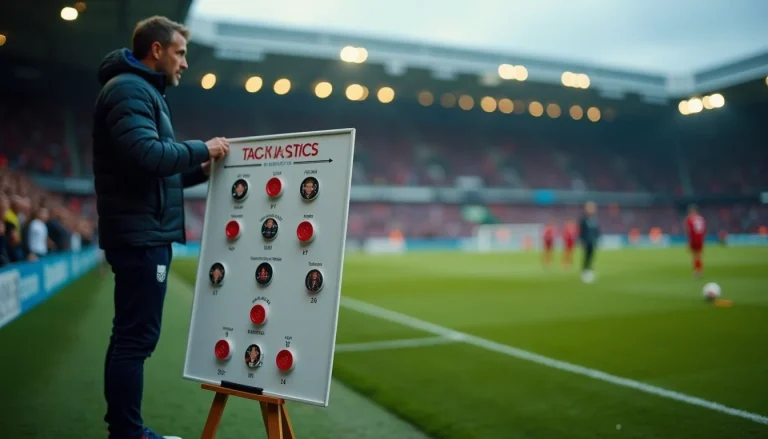
The press trigger sits on the other side of the same moment. It is the cue that tells a team to step up and press together, such as a loose touch, a pass played backwards or a pass to a particular player. The idea is that pressing on a signal is more economical than pressing constantly. Descriptions of triggers differ between coaching sources, and this section does not rely on any one of them for a definition.
No match or team data is stored for this article, so no turnover counts and no team examples are given. Anyone checking a real side would need event data from a named provider, with the competition and sample stated.
Several limits apply, and in our view they matter more than any single number:
- Providers can record and classify events differently, so a count from one source is not directly comparable with another.
- The definition of “high” depends on where a provider draws the line on the pitch.
- A turnover count cannot show whether a trigger was the cause. It records that the ball was won, not why.
- A high count says nothing about what followed. A press that wins the ball but loses it again straight away is not the same as one that creates a chance.
- A low count may reflect opponents who avoid pressure by playing long, rather than a failed press.
The numbers suggest a press is best judged by pairing turnovers with what happens next and with the opponent’s behaviour. Alone, the count is a starting point for analysis, not a verdict.
Verdict: a publication view still awaiting editor approval
Our view: no single press metric settles whether a high press works, and this is the publication’s editorial judgement, not a finding from data. PPDA, high turnovers and observed triggers each answer a different question. They are most useful when read together.
PPDA is a measure of how much a team lets the opponent pass before it acts. High turnovers show where the ball was won. Triggers, such as a poor touch or a pass to a full-back, describe when a team chooses to go. In our view, a team that scores well on one of these and poorly on the others has told you less than it appears to.
Two cautions apply to any comparison. Providers define PPDA differently, so figures from Wyscout, Opta or StatsBomb should not be set side by side without checking the definition and the zone it covers. Season-long averages also hide how a team presses against different opponents and game states.
A fair reading, then, uses several measures, names the data provider and says what the numbers leave out. Treated that way, pressing statistics support a tactical argument. They do not replace one.
Related articles

Sources
- Tactics and Strategies: How might you implement a high press? – Insight and analysis – England Football Learning – The England Football Community · Retrieved October 13, 2026
- How pressing was used to great effect in 2021/22 · Retrieved October 13, 2026
- PPDA: explained – Coaches' Voice · Retrieved October 13, 2026
- High Pressing in Football: PPDA and Pressure Metrics · Retrieved October 13, 2026
- What Is PPDA In Football? Passes Per Defensive Action Explained · Retrieved October 13, 2026
- Football Stats: PPDA and Packing. Measuring Pressing with Passes Per… · Retrieved October 13, 2026
- Looking beyond PPDA: How good™ is your pressing system? · Retrieved October 13, 2026
- PPDA – Wyscout Glossary · Retrieved October 13, 2026
- PPDA Explained: Formula and Football Meaning · Retrieved October 13, 2026
- PPDA Explained – ThePressingZone · Retrieved October 13, 2026
- PPDA in Football Explained: 3 Smart Pressing Numbers · Retrieved October 13, 2026
- Pressing Triggers · Retrieved October 13, 2026
- Why Pressing Triggers Matter: Simple Cues Coaches Teach · Retrieved October 13, 2026
- How Pressing Triggers Work: Reading Klopp's Patterns and When to Counter Them · Retrieved October 13, 2026
- How Liverpool FC Implements High-Intensity Pressing Tactics During Premier League Matches · Retrieved October 13, 2026
- What is pressing in football and why is it so important? · Retrieved October 13, 2026
- Ralf Rangnick Cristiano Ronaldo Manchester United 2021-22Getty/GOAL · Retrieved October 13, 2026
- Study on the efficiency of advanced pressing in the Premier League · Retrieved October 13, 2026
- Opta Football Stats Definitions · Retrieved October 13, 2026
- Quiz: Pressing Metrics: PPDA, High Turnovers & Traps – Quizzly.ai · Retrieved October 13, 2026
- Understanding PPDA: A Key Metric in Modern Football Analysis · Retrieved October 13, 2026
- Premier League club styles revealed in advanced Opta stats · Retrieved October 13, 2026
- Profiling play-styles in the 25/26 Premier League based on performance data · Retrieved October 13, 2026
- Premier League pressing statistics 2025/2026 · Retrieved October 13, 2026




Leave a Reply